
Choosing the right backpacking stove can make a significant difference to your outdoor experience. A good model should be lightweight, dependable, fuel-efficient and capable of preparing meals or bringing water to a boil without unnecessary delays. Whether you're heading out for a weekend hike or embarking on an extended wilderness expedition, having a reliable cooking system is an important part of your equipment.
We've considered a variety of backpacking stove designs and their suitability for different outdoor conditions. Our selection includes compact canister models, integrated cooking systems, multi-fuel options and alternative-fuel stoves. Each has its own advantages, depending on factors such as pack weight, cooking requirements, weather conditions and budget.
For most backpackers, the MSR PocketRocket 2 offers an excellent combination of portability, dependable performance and affordability. However, it isn't necessarily the best solution for everyone. Some alternatives provide greater protection against wind, faster boiling performance or more flexibility when preparing proper meals.
Best Stove System (all-in-one): Jetboil Flash Fast Boil System 1.0L

Jetboil Flash 1.0L Fast Boil Stove (Camping & Backpacking), Carbon
A compact camp stove that packs its own fuel canister and cook cup into one tidy bundle.
Product information
Our review: 4.8 out of 5
Product links
Pot: Integrated
Fuel: Canister
Weight: 13.1 oz.
What we enjoy: Boils 16oz of water in about 2 min.
Worth knowing: Fuel canister is sold separately.
As dehydrated backpacking meals have become increasingly convenient and widely available, many outdoor enthusiasts now rely on their camping stoves mainly for boiling water. The Jetboil Flash 1.0L Fast Boil System deserves serious consideration, if this describes your cooking habits.
Unlike traditional screw-on backpacking burners, the Flash combines its stove and cooking vessel into one integrated package. The supplied insulated pot connects directly to the burner through the heat exchanger, helping transfer heat more effectively while providing better protection against surrounding wind. This arrangement also eliminates the need to carry a separate cooking pot.
One of its biggest attractions is its impressive boiling speed. The system can bring one litre of water to a boil in approximately four minutes, making it particularly useful when preparing instant meals, hot drinks or dehydrated food after a long day on the trail. At 13.1 ounces, its overall weight is reasonable considering that the cooking vessel is included.
Jetboil has also introduced several practical improvements to the Flash without raising its price. These include a rotating click-style ignition that works similarly to the controls on a household gas stove, a rubberised grip around the lower section and improved locking connections between the pot and burner. Visual indicators have also been added to make it easier to confirm that the components are properly secured.
Despite these advantages, the Flash does have some limitations. Its main purpose is boiling water, so backpackers who regularly prepare more elaborate meals may find its cooking capabilities restrictive. It is also relatively heavy compared with ultralight alternatives.
For example, combining the MSR PocketRocket 2 and MSR Titan Kettle produces a complete setup weighing approximately 6.8oz, almost half of the the Jetboil Flash's weight. Those expecting particularly challenging weather conditions may also prefer the more wind-resistant MSR WindBurner.
Another alternative is the Jetboil MiniMo, which offers better flame adjustment for cooking at lower temperatures. However, it takes longer to boil water and comes at a higher price.
Overall, the Jetboil Flash is difficult to overlook if convenience, speed and straightforward operation are your main priorities. Its integrated design makes it particularly appealing to beginners and backpackers who primarily prepare meals using boiling water rather than cooking directly over a flame.
Preferred Alpine Ready Snow Melting Stove: MSR Reactor Stove System 1.0L
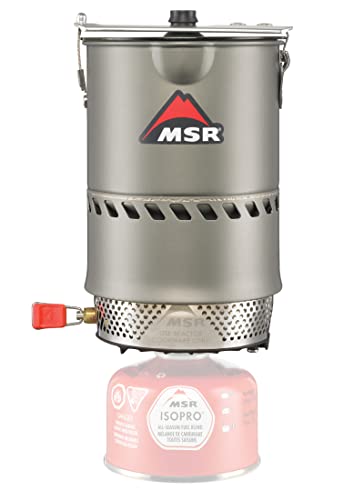
MSR Reactor 1.0L Windproof Stove System
A self-contained stove and pot setup that holds up well when the wind picks up on the trail.
Product information
Our review: 4.5 out of 5
Product links
Pot: Integrated
Fuel: Canister
Weight: 14.7 oz.
What we enjoy: Easy-to-carry package.
Worth knowing: It doesn't simmer, heavy and expensive.
When backpacking takes you into demanding alpine environments, ordinary camping stoves may struggle to deliver the performance required. Melting snow and producing hot water in exposed, cold and windy locations calls for a more specialised cooking system. This is where the MSR Reactor Stove System stands out.
Although it is considerably more expensive than most of the alternatives in this selection, its performance in difficult mountain conditions helps justify its premium positioning. The system combines a protective outer housing, an efficient burner and a stable integrated cooking arrangement. Together, these features make it particularly suitable for mountaineers, alpine travellers and backpackers exploring high-altitude regions.
Despite weighing 1 pound and 1 ounce, the Reactor remains competitive when compared with other integrated stove systems. Its larger cooking vessel is particularly useful when substantial quantities of snow need to be melted to produce water.
Nevertheless, its impressive performance comes with some disadvantages. The Reactor costs significantly more than popular alternatives such as the Minimo and Jetboil Flash. It also lacks proper simmering capability, making it less suitable for cooking meals that require careful temperature adjustment.
For backpackers who do not regularly encounter severe weather or need to melt large quantities of snow, spending extra on this model may not be necessary. The MSR WindBurner offers a more efficient alternative for many outdoor cooking situations.
Another consideration is fuel selection. Liquid-fuel stoves generally provide greater reliability at high elevations and in extremely cold conditions. However, canister systems remain attractive because they are convenient to transport and operate. MSR's Hanging Kit can also be used to suspend the fuel canister when camping in snowy environments, helping address some cold-weather challenges.
Ultimately, the MSR Reactor is best suited to serious mountaineers and alpine adventurers who require dependable boiling performance in demanding environments. For these users, its combination of power, stability and weather protection makes it an exceptional option.
Preferred Budget Starter Comboset Stove: Soto Amicus Stove Comboset
Pot: Included (2)
Fuel: Canister
Weight: 11.2 oz. (stove only: 2.9 oz.)
What we enjoy: Built-in igniter (no matches or lighter needed).
Worth knowing: The cookset is on the heavier side.
For anyone purchasing their first backpacking cooking setup, finding a reasonably priced combination of stove and cookware can be challenging. The Soto Amicus Stove Comboset makes the process considerably easier by providing the essential equipment in one package.
One of its strongest selling points is value for money. At approximately the price of MSR PocketRocket 2 alone, the Soto package includes a comparable burner and two cooking pots. This makes it an appealing starting point for beginners who would otherwise need to purchase additional cookware separately.
The stove itself is competitive with more established alternatives. Although the PocketRocket 2 is marginally lighter by approximately 0.3 ounces, the Amicus has a compact design, comes with an integrated ignition system and delivers a powerful 10,200-BTU output. These features make it a capable option for preparing simple meals and heating water while travelling.
The included aluminium cookware comes with 500ml and 1,000ml pots. Both are useful for basic outdoor cooking, particularly when preparing food or boiling water for one or two people. The smaller vessel can also function as a cap or an individual drinking mug, adding some versatility to the package.
There are, however, a few compromises to consider. Although the complete kit weighs 11.2 ounces, which is not particularly heavy for a two-pot cooking arrangement, the supplied cookware is not especially premium in quality. Backpackers who place a high priority on reducing their overall equipment weight may prefer investing in the titanium cookset instead.
It is also worth knowing that the Soto Amicus burner is available separately, nevertheless, considering that the combination package includes two useful cooking vessel; same price we believe it offers better overall value.
For beginners, occasional campers and budget-conscious backpackers, this is a practical way to acquire a complete cooking setup without spending considerably more on individual components.
Best Alternative-Fuel Stove: Solo Stove Lite

Solo Stove Lite Portable Wood Burning Camping Stove
A small wood burning stove that packs tight and boils water fast when you need it on the trail.
Product information
Our review: 4.6 out of 5
Product links
Pot: Not included
Fuel: Wood
Weight: 9 oz.
What we enjoy: Burns wood more fully for less smoke.
Worth knowing: Dry sticks required to get a fire going.
Not every backpacker wants to carry conventional gas canisters or liquid-fuel containers. Alternative-fuel cooking systems offer another approach, particularly for hikers who want to simplify their equipment and reduce the amount of manufactured fuel they need to transport.
Wood-burning, alcohol and solid-fuel tablet stoves each have their own advantages. Depending on the design, users may be able to collect suitable natural materials such as small branches, pinecones and twigs instead of carrying larger fuel containers.
Our preferred option in this category is the Solo Stove Lite. Its straightforward construction allows it to burn wood while also serving as a wind shield and pot support when paired with the alcohol stove. This additional functionality is useful for backpackers who want a backup cooking arrangement, particularly when travelling above the tree line.
One of the main features of the Solo Stove Lite is its double-wall design. This design encourages hot air to circulate within the stove, supplies oxygen to the burning material and directs the flame to flow through an opening near the top. This improved airflow and combustion process help it achieve better heating efficiency and faster boiling performance than many conventional wood-burning alternatives.
For hikers interested in alternative-fuel equipment, Solo Stove Lite provides an accessible introduction to this type of cooking system. It is relatively simple to operate and does not involve the maintenance requirements associated with more complicated stove designs.
However, it is important to understand that this model is not the lightest or most compact option available. Backpackers who are extremely conscious of every ounce they carry may prefer something smaller, such as the Solo Alcohol Burner.
Wood-burning stoves also have limitations compared with conventional canister and liquid-fuel systems. They generally cannot match their heating power or boiling speed. Nevertheless, this may not be a significant concern for campers who enjoy a more relaxed cooking routine and do not mind spending additional time preparing meals.
Another important consideration is fire safety and local regulations. Some wilderness areas prohibit wood-burning stoves, particularly in environmentally sensitive locations or regions experiencing elevated wildfire risks. Always check local restrictions before relying on this type of equipment.
For those who enjoy alternative-fuel cooking and want a simple, versatile stove that comes with relatively easy maintenance, the Solo Stove Lite is an interesting option worth considering.
Top Multi-Fuel Stove for Altitude, Cold and Travel: MSR WhisperLite Universal

MSR WhisperLite Universal Hybrid Fuel, Compact Camp Stove
A compact backpacking stove that runs on canister fuel, white gas, kerosene or unleaded gasoline.
Product information
Our review: 4.5 out of 5
Product links
Pot : Not included
Fuel: Canister/liquid
Weight: 11.2 oz.
What we enjoy: Multi-fuel compatibility.
Worth knowing: More complex to operate.
Selecting a stove for backpacking involves more than considering its weight and boiling speed. Environmental conditions, particularly low temperatures, can have a considerable effect on how efficiently a stove operates.
Conventional canister stoves are especially vulnerable to freezing conditions. As temperatures fall below freezing, pressure inside the fuel canister decreases, reducing the amount of fuel delivered to the burner. This can result in weaker flames and inconsistent performance.
For backpackers who regularly travel in cold environments, liquid-fuel systems are often a more dependable choice. These stoves use an integrated pump to pressurise the fuel supply. Another practical solution is a remote-canister stove that allows the fuel container to be positioned upside down during operation.
Among the available options, the MSR WhisperLite Universal is particularly appealing because it combines both approaches. Its versatile design allows it to operate using liquid fuel or a portable canister that can be inverted when necessary.
The ability to change fuel configurations makes this stove suitable for a wide range of outdoor conditions. In relatively mild weather, it functions as a conventional canister stove and provides good flame adjustment. If temperatures begin dropping, the canister can be inverted to improve fuel delivery. For extremely cold environments, switching to liquid fuel provides another level of reliability.
Its multi-fuel compatibility is also valuable for international travellers. Depending on the appropriate fuel bottle and configuration, it can use white gas, kerosene and unleaded gasoline. This flexibility is particularly useful when travelling through remote destinations where standard backpacking gas canisters or white gas may be difficult to purchase.
Although the WhisperLite Universal is relatively expensive and heavier than minimalist canister burners, its versatility makes it a worthwhile investment for certain types of backpackers. Its construction is durable, maintenance is relatively straightforward, and the stove can be cleaned and repaired when necessary.
For travellers exploring different countries, high-altitude destinations or regions with unpredictable weather, having several fuel options available can provide considerable peace of mind.
Overall Best Canister Stove: MSR PocketRocket 2

MSR PocketRocket 2 Ultralight Backpacking Stove
A tiny folding canister stove that boils a liter of water fast and packs down small enough to slip into a pocket of your pack.
Product information
Our review: 4.8 out of 5
Product links
Pot: Not included
Fuel: Canister
Weight: 2.6 oz.
What we enjoy: Folds down 2x2x3 inches, easy storage.
Worth knowing: Best for lighter cooking.
The MSR PocketRocket 2 has earned a strong reputation among outdoor enthusiasts, particularly those who value a simple and dependable cooking solution without carrying unnecessary equipment. Its compact screw-on construction makes it easy to attach to a fuel canister, while its lightweight 2.6-ounce design does not take up much room in a backpack. Despite its small dimensions, the burner produces an impressive 8,200 BTUs, providing sufficient heat for everyday backcountry cooking.
Another appealing feature is its flame adjustment, which gives users reasonable control when preparing meals that require more than simply boiling water. Its affordable price also makes it an attractive choice for both newcomers and experienced hikers. Although integrated systems such as the Jetboil Flash come with better protection against wind and improved fuel efficiency, PocketRocket 2 remains a stove we would confidently consider for most backpacking trips.
One of the reasons this model stands out is its ability to strike a practical balance between weight, performance and cost. Integrated cooking systems can be convenient, particularly when boiling water, but they generally involve carrying a heavier and bulkier setup. They also tend to cost more. Minimalist alcohol stoves are more appealing to hikers trying to reduce every possible ounce of pack weight. However, they typically sacrifice heating speed, flame adjustment and overall convenience.
The PocketRocket 2 avoids many of these compromises. It provides the essential features most backpackers require without adding unnecessary complexity. For those who prefer something more advanced, MSR also manufactures the PocketRocket Deluxe. Although slightly heavier at 2.9oz, this upgraded version provides a push-button ignition and a pressure regulator that helps maintain more consistent performance in colder temperatures.
Other Backpacking Stoves We Like
MSR Switch Stove System: Hybrid Stove Design

MSR Switch Lightweight Backpacking and Camping Stove System
A compact all-in-one camp stove with a round pot that heats water quickly and packs down small.
Product information
Our review: 4.2 out of 5
Product links
Pot: Included
Fuel: Canister
Weight: 13.8 oz (4.1 oz - stove only)
What we enjoy: Everything is neatly placed inside the pot.
Worth knowing: Fuel canister is sold separately.
The MSR Switch Stove System takes a different approach to backcountry cooking by combining features of traditional backpacking burners and integrated stove systems. Its interchangeable design gives outdoor enthusiasts greater flexibility when deciding how to prepare food while travelling.
The package includes a one-litre cooking pot that sits securely on a ring-shaped stove support. This arrangement works well for everyday tasks such as boiling water, preparing coffee or heating simple dishes.
For those who prefer more traditional cooking, the stove also features three extendable supports that can accommodate a backpacking frying pan. This allows users to prepare a wider selection of meals, including pancakes and dishes made with fresh ingredients.
Several additional features contribute to its versatility. The piezo ignition system makes lighting burners easier, while the pressure regulator helps with precise cooking temperatures and flame control.
The supplied pot also includes several useful details. These include a cork-style heat-resistant grip, a lid with a built-in strainer and a rounded base designed to improve heat transfer.
Storage is another area where the Switch performs well. When the cooking session is over, the stove, fuel canister, pot supports and plastic bowl can all be packed inside the supplied pot. The plastic bowl attaches to the bottom, allowing the entire cooking system to be stored together in a relatively compact package.
However, the Switch Stove is not without compromises. It occupies a position between minimalist burners such as the MSR PocketRocket and Jetboil Flash fully integrated systems, but it does not completely match either one's strongest advantages. The stove itself weighs 4.1oz, making it noticeably heavier compared to the PocketRocket 2 at 2.6oz.
Its cooking arrangement also feels less integrated than the Jetboil because the pot pivots on a separate ring support instead of locking directly onto the burner. This results in a setup that is not quite as stable. Performance testing also showed that the Jetboil unfailingly brought water to a boil more quickly than Switch, despite the latter's specially shaped cooking vessel.
Nevertheless, flexibility is where this model distinguishes itself. Its ability to support both basic water boiling and more elaborate outdoor cooking gives it an interesting advantage for backpackers who do not want to be restricted to one cooking style.
For campers who are prepared to carry some additional weight in exchange for greater cooking versatility, the MSR Switch Stove System is worth considering.
Windproof Stove: The MSR WindBurner Stove System

MSR WindBurner Personal Windproof Camping Stove System
A windproof backcountry stove and pot combo that packs down small and cooks fast in rough weather.
Product information
Our review: 4.5 out of 5
Product links
Pot: Integrated
Fuel: Canister
Weight: 15.3 oz.
What we enjoy: Excellent performance for windy conditions.
Worth knowing: Best suited for solo meals.
Backpacking in exposed locations can make cooking particularly challenging. Even a relatively strong burner may struggle when gusts interfere with the flame, resulting in longer boiling times and wasted fuel. MSR WindBurner Stove System addresses this problem with a design that provides substantial protection against surrounding wind.
Like other integrated cooking systems, the WindBurner combines the burner and cooking vessel into a single arrangement. However, its enclosed burner design is what makes it particularly attractive for outdoor enthusiasts travelling through windy environments.
Once the stove is ignited and the components are correctly connected, the protected burner can heat water efficiently without exposing as much of the flame to surrounding air. This gives it an advantage over conventional screw-on canister stoves, including the MSR PocketRocket 2.
The overall construction is also impressive. Components such as the honeycomb designed burner and pot lid are thoughtfully designed, and the system has demonstrated good durability through extended use. Although its price is relatively high, the WindBurner delivers a premium cooking experience for backpackers who regularly encounter challenging weather.
There are, however, several reasons why it may not be necessary for everyone. Its additional wind protection can be excessive for ordinary summer backpacking trips, particularly when conditions are relatively calm. The higher price may therefore be difficult to justify if you rarely cook in exposed locations.
Its boiling performance is also slower than Jetboil Flash. The WindBurner produces 7,000 BTUs compared with the Flash's 9,000 BTUs, and it does not come with a built-in ignition system. Nevertheless, for backpackers exploring windy mountain regions or other exposed environments, the additional protection can make a meaningful difference.
It is also less expensive than the MSR Reactor, while its integrated construction makes it particularly useful in confined or precarious camping situations, including portal edges and small bivouac shelters. MSR also offers other versions within the WindBurner range. These include the Duo-and-Combo systems, which provide larger cooking pots, simmering functionality and remote-canister connections for improved cold-weather operation.
Overall, the WindBurner is a premium option for outdoor enthusiasts who place a high priority on dependable cooking performance when exposed to strong winds.
Solo Stove Alcohol Burner
 Pot: Not included
Fuel: Denatured alcohol
Weight: 3.5 oz.
What we enjoy: Compact and light.
Worth knowing: Denatured alcohol needs to be properly stored.
Alcohol-burning stoves have become an attractive option among ultralight backpackers who want to keep their cooking equipment as simple and compact as possible. Unlike conventional canister systems, these burners use liquid alcohol, which can be stored in relatively small containers and is widely available from hardware stores, grocery retailers and petrol stations.
The Solo Stove Alcohol Burner builds on the traditional minimalist alcohol stove concept while introducing several practical improvements. Its brass construction provides a durable body, while the integrated flame regulator gives users better control over the amount of heat produced.
This makes it more versatile than many basic alcohol-burning alternatives, particularly when preparing food that requires some adjustment to the cooking temperature. Another useful feature is its screw-on cover and a rubber seal to help prevent leaks. This means any unused fuel can remain inside the burner rather than having to be transferred back into the original fuel container after cooking.
With its compact dimensions and straightforward operation, the Solo Stove Alcohol Burner is suitable for hikers who want to minimise the amount of equipment they carry. It can also serve as a practical backup cooking option for those who normally rely on another type of stove.
However, purchasing the burner alone does not provide everything required for a complete cooking arrangement. You will also need a suitable pot support and windscreen. These can be purchased separately or improvised using simple materials, such as aluminium foil and appropriately positioned rocks, where safe and permitted.
It is also important to understand the performance limitations of alcohol stoves. Compared with conventional liquid fuel and canister systems, they generally take considerably longer to heat water. Bringing one litre of water to a boil can take more than 10 minutes, depending on conditions and equipment configuration.
For backpackers who prioritise minimum weight above everything else, even lighter alternatives are available. One example is AntiGravityGear's Tin Man, which are made of recycled aluminium drinks can and weighs approximately 0.4 ounces.
Nevertheless, the Solo Stove Alcohol Burner offers a more substantial construction and a better combination of practical features. Its flame adjustment, fuel-storage arrangement and overall build quality make it a more refined option for regular use.
Before taking an alcohol stove into the wilderness, remember to check local fire regulations. Certain protected areas prohibit alcohol-burning equipment, especially during periods of increased fire danger.
Cooking System With Superb Simmering Capabilities: Jetboil MiniMo System

Jetboil MiniMo Portable Camping Stove (Adjustable Heat Control)
A compact backpacking stove that boils water fast and stores sideways to save pack space.
Product information
Our review: 4.9 out of 5
Product links
Pot: Integrated
Fuel: Canister
Weight: 12 oz.
What we enjoy: Uses half the fuel of traditional stove system.
Worth knowing: Slower boiling time compared to Flash and expensive.
Jetboil is widely recognised for producing integrated backpacking systems designed to heat water quickly and efficiently. However, the Jetboil MiniMo Cooking System offers something beyond the basic boiling functionality found in many of the brand's other models.
Its improved temperature regulator provides more precise control over the burner, allowing users to maintain a lower flame when preparing meals that require gentle cooking. This makes the MiniMo particularly appealing to backpackers who enjoy preparing their own food rather than relying entirely on dehydrated meals and instant dishes.
The integrated system includes a one-litre cooking pot covered with neoprene sleeve, which helps make handling more comfortable. Its shorter and wider construction also provides a more stable cooking platform than some taller, narrower integrated designs. Once the meal is done, the pot can conveniently double as a serving bowl.
These features give the MiniMo a practical advantage when cooking in the backcountry. Instead of being limited primarily to heating water, users have greater flexibility when preparing different types of meals.
The main disadvantages are its purchase price and slower boiling performance compared with the Jetboil Flash. Bringing one litre of water to a boil takes approximately 4 minutes and 30 seconds, compared with around 3 minutes and 20 seconds for the Flash.
Whether this difference matters depends largely on how you intend to use the stove. Backpackers who mainly prepare instant meals may prefer the faster Flash. Those who enjoy cooking and require better flame adjustment will probably appreciate the MiniMo's additional capabilities.
You could also assemble a conventional cooking arrangement by combining the MSR PocketRocket 2 with a separate pot. However, the MiniMo offers the advantages of an integrated design, including improved wind protection and a more stable cooking arrangement.
For one or two people who want a compact cooking system with more versatility than a basic water-boiling stove, the Jetboil MiniMo is an excellent choice.
Soto WindMaster Stove: Ultralight Wind-Resistant

SOTO WindMaster Backpacking Stove with 4Flex
A lightweight backpacking stove with a windproof burner head and a 4Flex pot support for bigger cookware.
Product information
Our review: 4.7 out of 5
Product links
Pot: Not Included
Fuel: Canister
Weight: 3.1 oz.
What we enjoy: More efficient and wind-resistant.
Worth knowing: Keep the base off sand/gritty ground to avoid trouble.
Traditional screw-on canister stoves have one noticeable weakness: Their burners are relatively exposed, allowing wind to interfere with the flame and reduce heating efficiency. While integrated systems provide better protection, they are generally heavier, bulkier and more expensive.
The Soto WindMaster Stove offers an interesting compromise for backpackers who want improved wind resistance without carrying a full integrated cooking system. Its distinctive design focuses on the arrangement of the pot supports and burner. Unlike the MSR PocketRocket 2, which uses a more conventional support structure, the WindMaster has clamp-on arms that allow the cooking vessel to be placed closer the burner.
This helps reduce the amount of space between the flame and the bottom of the pot. The burner itself is concave shaped to provide additional protection against wind. Although integrated systems such as the MSR WindBurner and Jetboil Flash offer more extensive coverage, the WindMaster achieves a useful balance between weather protection, portability and cost.
Another reason backpackers appreciate this model is its established reputation for reliability. Over the years many users have reported satisfactory operation, including trips through demanding outdoor environments. Compared with the PocketRocket 2, the WindMaster costs more and weighs approximately 0.5oz more.
However, it includes a built-in ignition system and a stable four-spike pot support that accommodates larger cooking vessels. Those who want to reduce weight even further can replace the standard support with Soto's lighter TriFlex support for the pot.
Although it is possible to find cheaper and lighter alternatives, the WindMaster occupies a useful in-between basic minimalist burners and larger integrated systems. It offers improved protection against wind without requiring backpackers to carry significantly more equipment.
For hikers or survivalists who frequently explore exposed mountain trails or camp in areas where windy conditions are common, the Soto WindMaster is a particularly appealing choice.
Hope You Find This Article Useful
There you go, we have reviewed our favourite backpacking stoves and explain what makes each one worth considering. Once you've selected your cooking equipment, you may also want to explore our emergency survival meals guide for convenient ready-to-eat or easy prep meal options to take on your next adventure. If you find this article useful please share it with someone whom you think will find this information useful.


